October 2026 – Tesla continues to roll out FSD v14 releases to Hardware 4 vehicles. Those with Hardware 3 are starting to receive “FSD v14 Lite” which is currently rolling out and will be made widely available to Hardware 3 vehicles, including Model S and X in 2026.
FSD Beta – Wider Releases
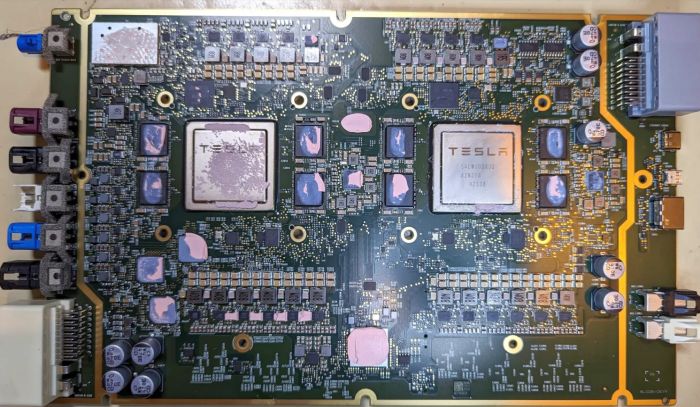
FSD 14 – Tesla’s Full Self-Driving (FSD) is entering one of its most significant transition phases since the jump to v12. FSD V14.3.X is currently HW4/AI4-only (the full, uncompromised version). Hardware 3 (HW3) vehicles — found in Teslas built roughly through early 2023 will not receive V14.3 in its current form. Tesla has been very clear (in earnings calls and public statements): They are providing a FSD v14 Lite version (or optimized/pruned v14 branch) specifically for HW3, which has now been rolled out – see below for more.
FSD v14.3.11 Rolling out
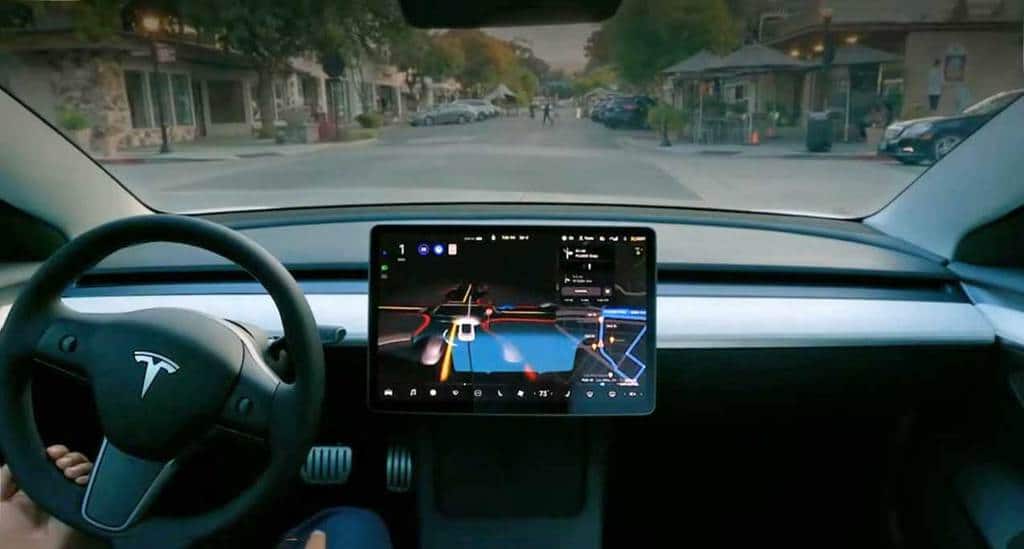
Tesla FSD 14.3.11, released October 7, 2026, is primarily a refinement update focused on improving driving reliability, stability, and consistency rather than introducing major new features. It builds on the FSD 14.3 improvements, including faster reaction times, smoother driving behavior, better handling of complex intersections, improved obstacle detection, and more decisive parking. Tesla has not identified specific changes from 14.3.10, suggesting this release primarily addresses bugs and performance issues.
FSD v14.3.11 Initial Take from Testers
Tesla FSD 14.3.11: Review Take - Smoother Performance with Persistent Highway and Navigation Quirks
Tesla’s Full Self-Driving (FSD) version 14.3.11 (build 2026.33.5) arrives as an incremental point release focused on refinement, bug fixes, and system smoothing. While official release notes remain unchanged from the prior 14.3 builds, real-world testing demonstrates that this update successfully addresses much of the jitteriness, steering wheel twitching, and phantom braking observed in earlier releases. The result is a highly confident and natural-feeling drive during standard urban navigation and open-road cruising. However, persistent software quirks—particularly around highway lane selection, speed control, and complex enclosed environments—continue to require driver oversight.
The Pros: Major Improvements
- Enhanced Smoothness and Reduced Jitters: Jerky braking, steering wheel twitching, and phantom "brake stabbing" at crosswalks, construction zones, and open roads are significantly reduced, providing a composed, confidence-inspiring ride.
- Superior Hazard and Animal Detection: The vision system demonstrates rapid reaction times, detecting night-time hazards like small animals (e.g., rabbits) and road obstructions early, slowing down smoothly and naturally.
- Decisive Intersection & Roundabout Handling: Unprotected left turns, busy multi-lane merges, and roundabouts are executed smoothly without excessive hesitation.
- Improved Heavy Vehicle Buffering: On highways, the car maintains a larger, safer buffer when merging back in front of semi-trucks and handles complex flex lanes properly.
- Clean Parking Execution: When navigating standard parking spaces or driveways, the system positions itself cleanly between marked lines.
The Cons: Persistent Limitations
- Highway Left-Lane Camping: The vehicle frequently lingers in the far left passing or HOV lane longer than necessary instead of returning to right-hand travel lanes when traffic clears.
- Routing and Lane Decision Flaws: Navigation occasionally chooses suboptimal routes, misses highway exits, or selects incorrect lanes at toll plazas (e.g., defaulting to full-service cash lanes rather than express electronic lanes).
- Absence of Manual Max Speed Control: Drivers remain unable to set a manual maximum speed cap, relying entirely on preset profiles (Standard, Hurry, Sloth) which can lead to driving too slowly or exceeding desired margins when speed limit signs are misread.
- Drive-Through and Gate Failures: The software struggles with complex enclosed logistics, failing to stop at fast-food drive-through payment/order windows or select correct entry gates at airport parking structures.
- Curb-Cutting & Dead-End Confusion: Certain vehicle form factors (such as Model Y variants) or narrow dead-end roads can trigger tight turn angles that risk clipping curbs or getting stuck in multi-point turning loops.
- Stop Line Positioning & Speed Bump Timing: FSD occasionally brings the vehicle to a halt near physical stop sign poles rather than at painted white limit lines and can approach speed bumps too quickly before applying the brakes.
- Attention Monitoring Sensitivity: Low fall sun glare and facial shadows (such as from wearing a hat) can cause the driver attention monitoring system to cycle in and out of hands-free mode.
FSD v14.3 Lite for HW3 Vehicles
Tesla’s Full Self-Driving (FSD) v14.3 Lite (build v2026.33.5) arrives as a refined point update for vehicles equipped with Hardware 3 (HW3). Operating identically across both Intel Atom and AMD Ryzen infotainment chips, this release focuses on under-the-hood neural network parameter tuning and bug fixes rather than introducing major new user-facing features. For HW3 owners, the update provides four selectable driving speed profiles (Sloth, Chill, Standard, and Hurry), omitting only the aggressive "Mad Max" mode reserved for newer hardware.
FSD V14.3 Lite First Impressions
Overall, the release delivers a noticeably safer and smoother drive, resolving critical quirks from earlier 14.x builds while leaving a few persistent low-speed logic edge cases
The Pros: Major Improvements
- Dramatically Reduced Steering Wobble: The annoying steering wheel "wobble" over road bumps and high-speed oscillations observed in earlier builds has been greatly reduced or virtually eliminated during normal driving.
- Fixes for False Emergency Pull-Overs: Resolves a major flaw from prior versions where tree shadows, bouncing headlights, or road reflections triggered sudden, unsafe swerves toward the right curb to yield for non-existent emergency vehicles.
- Composed Heavy Rain Performance: Demonstrates excellent stability on wet, curvy roads during heavy downpours, automatically moderating speed to maintain traction and prevent hydroplaning.
- Strong Off-Road and Steep Grade Capability: Smoothly negotiates unpaved gravel roads, steep mountain hills, dips, and rough ruts with steady deceleration and composed throttle control.
- Driveway Entry & Unpark Navigation: Reliably turns directly into residential driveways around parked cars and handles parking lot maneuvering with faster responses than legacy 12.x software.
The Cons: Persistent Limitations
- Occasional Minor Jitters: The car can still exhibit brief, sudden "jitters" or minor lateral twitches to the left or right when reacting to low-angle shadows or visual artifacts on the road.
- Blinking Yellow Light Misinterpretation: The software continues to misinterpret blinking yellow caution lights as flashing red lights, coming to unnecessary complete stops unless overridden with the accelerator.
- Sun Glare & Camera Occlusion Sensitivity: Bright, direct sunlight low on the horizon can trigger camera visibility alerts or false obstacle slowdowns.
- No Garage Parking Support: While driveway navigation is reliable, the software still fails to park inside enclosed home garages.
- Steep Shoulder Edge Detection: On narrow, unpaved rural drops, low-clearance vehicles risk cutting corners too tightly or bottoming out without driver supervision.
- Tailgating Pressure Sensitivity: On steep downhill grades, close tailgating from behind can cause the vehicle to increase its speed uncomfortably.
What’s Coming Up Next for FSD?
Tesla’s autonomy roadmap is currently in a transition phase, deploying FSD v14.3 while preparing for major upcoming milestones, including optimized support for older hardware and the eventual leap to version 15. This progression focuses on stabilizing the current architecture, introducing end-to-end autonomous parking, and significantly increasing model complexity to achieve true unsupervised autonomy,.
Key Roadmap Milestones
- “Banish” Autonomous Parking: Slated for the Summer 2026 update, this end-to-end solution allows a driver to exit at a store entrance while the car independently navigates a parking lot to find a spot and park itself.
- FSD v15 Architectural Shift: Planned for late 2026 or early 2027, v15 will introduce a 10-billion parameter model. This 10x increase in parameters is intended to enable “active reasoning,” allowing the vehicle to better anticipate hidden hazards and handle chaotic environments like multi-lane roundabouts.
- HW4/AI4 Compatibility: Tesla has confirmed that v15 will run natively on current Hardware 4 (AI4) systems through aggressive model distillation, dispelling fears that it would require next-generation hardware.
- Gateway to Robotaxis: The deployment and validation of the v15 architecture is the explicit prerequisite for “Unsupervised FSD” and the launch of Tesla’s commercial Robotaxi fleet.